Media Codes and Conventions

Media codes and conventions are like the building blocks of all the media around us. Media codes generally have an agreed meaning, or connotation, to their audience. There are three types of media codes, symbolic codes, technical codes and written codes. Conventions are expected ways in which codes are organised in a product.

SYMBOLIC CODES
Symbolic codes are social in nature. What this means is that these codes live outside the media product themselves, but would be understood in similar ways in the ‘real life’ of the audience. For instance, if you saw somebody receive a red rose in a film, you would assume there is a romantic relationship between the two characters. If you gave somebody a red rose in real life, you might be hoping the same. Symbolic codes in media include setting, mise en scene, acting and colour.

Setting
Setting is the time and place of the narrative. When discussing setting, you can describe the setting of the whole story or just a specific scene. A setting can be as big as the outback or space, or as small as a specific room. Setting can even be a created atmosphere or frame of mind.

Mise en scene
Mise en scene is a French term that means ‘everything within the frame’. In media terms it has become to mean the description of all the objects within a frame of the media product and how they have been arranged. An analysis of mise en scene includes:

• Set Design
• Costume
• Props
• Staging and Composition

Acting
Actors portray characters in media products and contribute to character development, creating tension or advancing the narrative. The actor portrays a character through:
• Facial expression
• Body Language
• Vocal qualities
• Movement
• Body contact
Colour
Colour has highly cultural and strong connotations. When studying the use of colour in a media product the different aspects to be looking at are:
• Dominant colour
• Contrasting foils
• Colour symbolism

TECHNICAL CODES
Technical codes are codes that are specific to a media form and do not live outside of them. For instance, our understanding of different camera shots and their connotations make sense when we look and films and photographs, but mean nothing to us outside of those forms. Technical codes in media include Camerawork, Editing, Audio and Lighting.

Camerawork
Camerawork refers to how the camera is operated, positioned and moved for specific effects. Aspects of camerawork include:
• Positioning
• Movement
• Framing
• Exposure
• Lens choice
Editing
Editing is the process of choosing, manipulating and arranging images and sound. Editing is generally done for four different reasons:
• Graphic edits
• Rhythmic edits
• Spacial edits
• Temporal edits
Audio
Audio is the expressive or naturalistic use of sound. Audio can be diegetic or non diegetic. The three aspects of audio are:
• dialogue
• sound effects
• music
Lighting
Lighting is the manipulation of natural or artificial light to selectively highlight specific elements of the scene. Elements of lighting include:
• Quality
• Direction
• Source
• Colour
WRITTEN CODES
Written codes are the formal written language used in a media product. Just like technical and symbolic codes, written codes can be used to advance a narrative, communicate information about a character or issues and themes in the media product.
Written codes include printed language which is text you can see within the frame and how it is presented, and also spoken language, which includes dialogue and song lyrics.
CONVENTIONS
Conventions are accepted ways of using media codes. Conventions are closely connected to the audience expectations of a media product. Different types of conventions include form conventions, story conventions and genre conventions.

Form conventions
Form conventions are the certain ways we expect types of media’s codes to be arranged. For instance an audience expects to have a title of the film at the beginning, and then credits at the end. Newspapers will have a masthead, the most important news on the front page and sports news on the back page. Video games usually start with a tutorial to explain the mechanics of how the game works.
Another example would be continuity editing. Most video forms follow a set of editing rules and techniques called continuity editing which allows for the audience to easily understand what is going on in a scene and who is talking to who.
Story Conventions
Story conventions are common narrative structures and understandings that are common in story telling media products. Examples of story conventions include:
• Narrative structures
• Cause and effect
• Character construction
• Point of View
Genre Conventions
Genre conventions point to the common use of tropes, characters, settings or themes in a particular type of medium. Genre conventions are closely linked with audience expectations. Genre conventions can be formal or thematic.

Intellectual Property

Now let’s talk about Intellectual Property.

Intellectual property protection is extremely important. When it comes to protecting IP two areas of protection should be taken in account: 1) protecting your liability and 2) protecting your intellectual property (IP).

Liabilities like the terms and conditions prevent claims initiated by people who use your website. The other liability known as privacy policy is legally required for websites that collect user data. Protecting your IP requires confidentiality agreement. Every employee, developers and programmers should sign a non-disclosure agreement in order to avoid disclosure of trade secrets, in case they are involved in your website development. IP assignment agreement is also essential for the protection of IP when you hire people to work on your website.

Among the assets of IP protection a patent is the most expensive and complex form of protection. A patent helps to prevent others from exploiting the owner’s invention. It is a territorial right exclusively applicable in the area or geographical region where a patent has been granted. It is highly recommended that you consult a patent attorney if you’re going to head in this direction.

IP protection asset like a trademark is a sign that can distinguish a good or a service of an enterprise from the other. It is protected by IP rights registered with a national or regional office of emblem, in order to confer an exclusive right to use the registered logo.

Copyright is the legal term that describes the rights of the creators on their creative inventions that could be a design, a painting; literary work etc. in simple words copyright protects the work of a creator.

What is Media and Information Literacy?

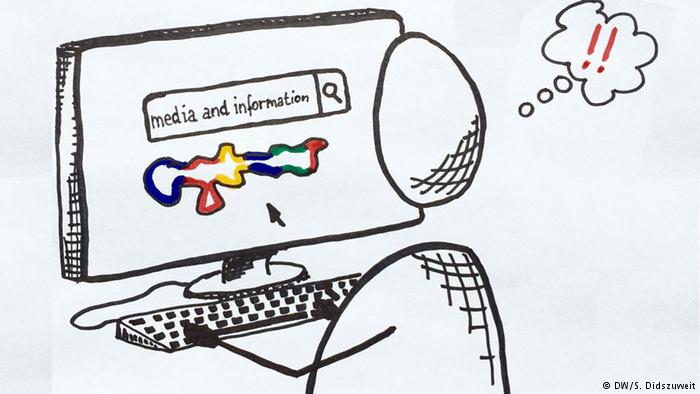
Media and Information Literacy is a combination of Media Literacy and Information Literacy. Media literacy emphasizes the ability to understand the functions of media and evaluate how media performed, while the information literacy emphasizes the significance of access to information, evaluation and ethical use of such information.

Since we are now on the information age also known as digital age, it is important for us to have knowledge on media and be a media and information literate individual.

MIL as a SUBJECT!


This slideshow requires JavaScript.

Media and Information Literature is a subject that challenges your ability and creativity. It is also a way to explore your imagination to create a more meaningful thing. In this subject you need to exert a lot of efforts for you to have the chance to develop new skills and create pieces that are very different from other. Thus, It gives you understanding of the production process and the ability to critique your own work. Just embrace the difficultly and create a more interesting work but definitely it’s enjoyable.


Media literacy is the ability to identify different types of media and understand the messages they’re sending. Kids take in a huge amount of information from a wide array of sources, far beyond the traditional media (TV, radio, newspapers, and magazines) of most parents’ youth. There are text messages, memes, viral videos, social media, video games, advertising, and more. But all media shares one thing: Someone created it. And it was created for a reason. Understanding that reason is the basis of media literacy.


Media and Information Literacy

Media and information literacy enables anyone to create judgement as a media users to understand, create, communicate and think critically.

Furthermore, broadcast and online media has an ability to connect to a large number of audiences to bring them the updated news more efficiently. Hence, people are now able to participate and analyze different information they got from this media platform.

mi

image source: https://www.google.com.ph/url?sa=i&rct=j&q=&esrc=s&source=images&cd=&cad=rja&uact=8&ved=2ahUKEwir1LaE-ozdAhUHYo8KHWEoBksQjRx6BAgBEAU&url=https%3A%2F%2Fwww.dw.com%2Fen%2Fmedia-and-information-literacy%2Fa-18406566&psig=AOvVaw2-yrzTIaB1rrcMRtytD6vP&ust=1535449607230501

!!!

Most of individuals know how to use technology, some are baby boomers, but most of the users are millennial, generation Z. They have a broad knowledge in terms of technology. Although some of them did not go to school to study things that are related to technology, still they are knowledgeable in this field. Their capabilities in technology help them to cope for their day-to-day living, it helps them in their school related works or makes their job a lot easier.

However, things like this have its own disadvantages. It may affect on how we communicate with other people personally, it may cause trouble to us if we do not use technology properly, or it could turn us into someone we are not. So always be wise enough to use technology!

iii


image source: https://www.google.com/url?sa=i&rct=j&q=&esrc=s&source=images&cd=&cad=rja&uact=8&ved=2ahUKEwjxxpm_-IzdAhUW4o8KHUK8AKQQjRx6BAgBEAU&url=https%3A%2F%2Frobinsonan14.wordpress.com%2F2015%2F01%2F03%2Fthe-disadvantages-of-children-using-technology-today%2F&psig=AOvVaw2B7ibwYTnkB-B-TShEodU3&ust=1535448933723382


Avoid Plagiarism

Media is continuously growing and expanding with the help of new technology, through this we can search everything we want to know including our homework, school projects and many more. Just one click away and the answers that we need are already placed in a screen, we just have to copy the content given to us by google and we can now paste it in Microsoft word, and that’s it, the assignment is ready to be passed, easy peasy.

But have you thought of giving credits to the author or the site? Definitely No! You see, that’s the common mistake of every student, they think that once they have finished doing their research for a particular assignment, does not mean that it they are done, the last thing that they should do before saving the document is to put the source where they have found the answer to their assignment or mention the author, because if you do not do this, you will be charged in committing plagiarism which is against the law.

R.A 8293 also known as Intellectual Property Code of the Philippines is a legal protection given to the owner for his original work. Once you have reproduce a certain work without the permission given to you by the owner, you will be charged for committing such crime. To avoid plagiarism, do not forget to give credits to the owner and avoid reproducing any copies from a certain work to show respect to the one who made it.


26_4

image source: https://www.google.com/url?sa=i&rct=j&q=&esrc=s&source=images&cd=&cad=rja&uact=8&ved=2ahUKEwjM3v2X9YzdAhXJLo8KHTxjBf4QjRx6BAgBEAU&url=http%3A%2F%2Fwww.gancaycolaw.ph%2FLaws-Case-Studies%2FIP-Laws%2Farticle%2FThe-Intellectual-Property-Code-of-The-Philippines-Republic-Act-No-8293&psig=AOvVaw1HkxZWD26fn2k3QVWra9vz&ust=1535448368378110


“Don’t use social media to impress people; use it to impact people” – Dave Wills
Most of us are using different social media platforms in order to impress our followers and friends online. We even change ourselves just to fit in with other people, yet we don’t realize that these platforms are made for us to share our knowledge and make a huge impact in other people’s lives as well as create a progress not only in the virtual world but also in the real world.

#firstpost

We all have our own ways on how should we be responsible in many aspects in life. We may differ on how we should act accordingly because we all have different personalities, but when it comes to our responsibilities as media users, we should always keep in mind that we should always spread the appropriate information coming from different media.


social-engagement-imagePlaceholder Image